What’s with the counting? Some sort of count down?
Well, yes actually.
Why? Wazzup?
Hard to put into just a few words – even for a maestro like me. Best I can do now is that it is some sort of “Friends, Romans, Countrymen” sort of moment where an attempt to explain something complex like regicide is in fact a valedictory. Those with a low level of interest, or threshold of boredom or who have got here by mistake, should take off now.
Right, if you are all sitting carefully, I’ll begin. Right now I’m feeling pretty chipper and OK with myself. I seem to be as free as ever I’ll be from depression – off the tablets anyway. My latest audit comes to a balance that I’ve fulfilled all my parental responsibilities. The two individuals have been properly raised and would say ‘F (go away)……..off’ at any uninvited initiative of mine. Grandchildren have got to the stage where they are hardly children and have sensible parents anyway. Thanks to Norma’s efforts, we are, barring major disaster anyway, financially secure. You can switch off the red light and hang up the red dress now dear.
This enviable state leaves me at a bit of a loose end. I have free time to cogitate and that audit reveals a few unclosed accounts. The first thing I have to accept is that I am not getting any younger, wiser or gaining any major influence over anything. I’m just drifting. The analogy is that drifting ships sometimes end up in difficulty on a lee shore. Disaster and tragedy intervenes before they are ready to deal with it. I do not wish to drift into anything. Whilst, at the moment, I have not the slightest desire to jump off a very high building, I feel that my time on earth has been amply filled and would not complain at a swift soldier-like ending. As Mr. Lauderdale said at ‘Batasi’, “I have seen Calcutta. I have eaten camel dung. My knees are brown, my navel is central, my conscience is clear, and my will is with my solicitors, Short and Curly”
This world we have now is not the world I signed up to. Whilst I am not religious in the sense that I follow any particular belief to the exclusion of others, I have always tried to work to a set of beliefs. My short stay with the Buddhists and consequent study demonstrated that what I tried to live by is in fact close to their ideas. So, I’m more ‘what would Buddha do’ than the managerial mantra of ‘what would Jesus do’.
That basis for my behaviour has pretty well gone. For example, I used to be comforted by the idea that evil was punished – There’s always a day called Katchum. If not by some judicial system, then by kismet, karma, whatever. The baddy would walk free from court and be run over by a bus sort of belief. Childlike and simple – yes. False – who knows; it kept me happy when I thought I saw it at work. That natural justice concept has gone. Time and time again we see the evil ones triumph and unpunished on this earth. Maybe they will be re-incarnated as a cockroach but I want justice now. People could universally be regarded as basically honest. Now – I count my change everywhere. My defence mechanism of reverse apartheid in keeping away from situations and people I know I will not like, is coming under more and more pressure.
Lots of the things we respected have been trodden into the mire of modernity. Attitudes to the aged, respect for other cultures and, here’s a really old word, ‘gentlemanly’ conduct are all bygones. We are being blamed now for ‘sins’ we committed when they were not sinful. Smokers and the obese are being denied medical treatment because their problems are considered self-inflicted. I am sure the day will come when some lesbian vicar living with her same-sex civil partner (both practising celibacy – right!) will send me to purgatory. Just because I committed the sin of allowing myself as a fifth-former to be sexually abused behind the bike-sheds by a sixth-form girl. It’s all my fault and it’s all her fault if she is still living.
So, my bags are packed and I’m ready to go. Thankfully, there is very little baggage and I can travel light as I walk through the curtains at the back of the stage. Note use of ‘walk’. Let there be no doubt that I do not wish to be kept alive by connection to some 13 amp socket. If things get to the stage when I need to walk to maintain my personal dignity on my own terms, I’ll make that clearly known. I’ve spoken elsewhere of my wish to be remembered on my own terms rather than in the memory of those who knew me. Knowing that a job is only finished properly when done by a committee of one, I need to set the parameters.
Firstly, no fuss or ceremony. Neither Christian, heretic or natural. Those who feel that the way should be smoothed by prayer are welcome to do so – in their usual fashion and venue and not gathered around a box full of what is, basically, carrion. Drinkers are welcome to have an extra one. Cremation – of course. After that? Well, I’d rather like to be the payload in a damned big firework. Yes – I was a soldier and fully enjoyed all the pomp and splendour but it’s rituals have no place in my life now. I’ve heard all the martial music I need.
So, that is ten, nine, eight. I wanted to get this dealt with before Christmas which always makes me very sombre. The alternative was something in an envelope tucked behind the mirror. Only to be found when the house clearance men come round. There is too much to utter in a final gargle. At the end of this – right now – I feel better for having written these few words. It is something I wanted to do and have done.
Will there be a seven, six, five? Dunno. There will certainly be no three, two, one from me.
Saturday, 17 December 2005


Friday, 16 December 2005
Stolen from another blogger but maybe valid?
Paranoid sensibilities
If I was of a paranoid and conspiratorial mind, I’d point out that there’s an interesting coincidence between Charles Kennedy pressuring the Government for answers over US ‘rendition’ flights, and the sudden rush of anonymous sources briefing the press that his leadership is under threat.
But I’m not, so I won’t.

Just a small one....

 Hope the image is not too stressful. Presence here because someone sent me some belly-dancer photographs and invited comments. Firstly, we need to dignify the lady by giving her a proper name. She is an as-sharqi dancer - a dancer of the deserts. In her own community she is highly respected and has none of the sleazy night club image we might have. The top dancers have their own troup of musicians and lighting men. They are paid large sums of money to entertain at big events - weddings, christenings and things such as that. Anyway - that's why she is here. A c t u a l l y - er hum - er - she is here because I like her. She is modelling part of a costume - they cost large sums as well - so we do not know if she is in fact a dancer. Just say, she has the right basics for the job. She is a well-rounded girl. Plenty of assets. The pose is unfortunate - she looks more like a person who puts loads on camels. Might even be the Governor of California in drag. Hasta la vista baby.
I have fond memories of this sort of lady.
Driving to the beach today we passed through Foulden village. This is a place that has won the Scotland in bloom competition. Quite a pretty little place really - just a line of cottages alongside one edge of the road. When the flowers are in bloom it is very pretty. There is, however, a certain regimentation that the old soldier in me recognises. All cottages have to have the same range of flowers. All must have windows and doors floralised. When we were looking for a place up here I commented to Norma that Foulden was one place that we would not go. It was quite clear to me that there was a flower gauliter who ruled with a rod of iron. Anyway - long story short - today I noticed that there was not one single sign of the approaching festive season (for oldies - Christmas; there - I've said it!!). All other places have their displays set up. Some a bit tacky to my old eyes but festive - yes. Foulden looks like Colditz on a wet Monday. Obviously, the uber-Witch of Eastwick-manque has spoken. Nothing until zero hour on C-Day minus five. Only real holly or ivy. No moving images. Bulbs in two colours only. Nothing more than x-metres tall.
My God - village life!!
Tuesday, 13 December 2005
Monday, 12 December 2005
Show test card
 Normal service will be resumed as soon as possible - writer has heavy cold and is confined to bed.
Saturday, 10 December 2005

Friday, 9 December 2005
Drivers who kill
Not that there should be a connection but the forthcoming season of joy will doubtless bring spiritual desolation to some unfortunate where driving is the cause of the death of a loved one. I know why there is a perception that the punishment does not fit the crime. This, by a magistrate, is a very good statement on the problem. Maybe read it now - just in case.
Death on the Roads
One of the most difficult things that a magistrate has to do is to deal with a case where someone has been killed on the road, and a driver faces the court as a result.posted by Bystander
The worst offences, of causing death by dangerous driving, or of causing death by careless driving while under the influence of alcohol are straightforward - we would commit them to the Crown Court where they usually attract long prison sentences. The difficult cases are where someone has been killed as a result of careless driving. This offence can only be dealt with by magistrates, and is not imprisonable. Sometimes the tiniest error on the part of a driver can result in a death; this is fairly common where motorcycles are involved. We have always been trained to punish the offence and not the consequences, and when I was first trained we were given an example:-
You and I are driving identical cars side by side, at identical speeds, approaching traffic lights. Stationary in front of us are two more cars, identical to each other. We each hit the car in front at exactly 30mph. The driver of 'my' one gets out of the car uninjured. By horrible chance yours is dead. Should we receive different punishments? My view has always been 'no', as the carelessness is similar. Let us say that the penalty is assessed at £300 fine each, plus six penalty points (offence carries 3 to 9). Next Friday the local paper comes out with a photo of the dead man's mother in tears outside the court, under the screaming headline:- "THE PRICE OF MY SON'S LIFE : £300!" and a picture of Diana-style flowers fixed to the traffic lights.
It is vital that the Chairman prepares the court's judgement with enormous care, explaining clearly the reason for the sentence being what it is, and expressing sympathy with the bereaved. In a case that I saw the defence solicitor addressed about half of his mitigation to the victim's family. But that was not enough, and the victim's mother went off to the Daily Mail who gave it a full page.
The Government is currently reviewing Road Traffic law, and one of the proposals is to create a new imprisonable offence of causing death by careless driving. This runs a real risk of the courts dancing to the tabloids' tune, and imposing disproportionate sentences to please the mob. Accidents happen, and it is for a dispassionate and impartial tribunal to assess the proper penalty if one is appropriate. I fear that we are going to come under pressure to impose severe sentences. It will not, in my view, save a single life.
NHS for all?
As a big fat old man, I am naturally concerned about the NICE (as in NICE one?) report which appears to advocate that if a patient who presents for treatment is overweight, a smoker or drinkerm it is OK to defer or even refuse him treatment.
Leave aside the point that without examination there is no way to establish any connection between the 'criminal behaviour' and the affliction, we still have the possibility that the poor sod who does not fit the profile is that way because of the actions of the Government. Rubbish food and no employment tend to go together. Depression may appear to be lifted by alcohol. I say appear before everyone crowds in with their expert medical opinions. The woman is depressed, she drinks, she wants to get treatment for the depression, she is refused because she drinks. In proper hands, this could be written up to be better than the Dead Parrot Joke. I do not intend to get up tight about this; they can treat me or leave me alone and I'll deal with it myself when the time comes. However, this guy has a neat view on the NICE.
Leave aside the point that without examination there is no way to establish any connection between the 'criminal behaviour' and the affliction, we still have the possibility that the poor sod who does not fit the profile is that way because of the actions of the Government. Rubbish food and no employment tend to go together. Depression may appear to be lifted by alcohol. I say appear before everyone crowds in with their expert medical opinions. The woman is depressed, she drinks, she wants to get treatment for the depression, she is refused because she drinks. In proper hands, this could be written up to be better than the Dead Parrot Joke. I do not intend to get up tight about this; they can treat me or leave me alone and I'll deal with it myself when the time comes. However, this guy has a neat view on the NICE.
Normal service will be .............
Been missing any real drive to contribute here.
Strangely, I think it is because I am feeling pretty chipper.
From lots of reading, I think that most people (not all, before you start!) blog because they want to moan or draw attention to something where they feel moans from someone else would be merited. After all, most people can get themselves to complain about things like bad service or inadequate provision of some resource. Few go the other way and fire off approval to all and sundry when something is satisfactory.
So it is with me. I have the same aches and pains and inability to do what I did twenty years ago but the present situation is that I don't really care about any of this. My attitude that there is a big conspiracy to do me down has left me - maybe the tablets are working? Doubtless, were I to carry out some sort of detailed audit of my blessings I would find there is just as much to bleat and moan about. Right now, I cannot be bothered to look. Long may that last.
So, if I miss a few days it is because I do not have anything strong enough to motivate me and not that I am spending my time on splicing bits of string together to make some sort of hangman's rope.
Thursday, 8 December 2005

Wednesday, 7 December 2005

What a lovely day!!
In terms of scenic beauty, today must be one of the finest days I have seen.
We had a very hard frost overnight. By tenn’ish, the sun had got up but was still very low and slanting. The temperature was about 2 degrees Centigrade.
There was a blue sky that I can only describe as better than Arizona. A really brilliant mid-blue. Other than a few aircraft con-trails, it was completely clear. This meant that the brilliance of the sun was made much sharper. One could literally see for miles. A couple of aircraft went over and added more pin sharp white tracks so there was little wind at high level. It was so clear that I could see the aeroplane itself.
Up in the hills, the low sun meant that some parts of a field would be in bright sunlight and others still frosty in the shadows. The grass was brilliant verdant green. Footpaths and sheep-walks drew a delicate tracery that made some green fields look like lace. Where there were streams, they were mirror black or sparkling gold if the sunshine glanced off. Trees were shown in sharp contrast. In some areas of roadside woodland that are normally just dense blackness, the searchlight effect of the sun brought out the tangled trunks and undergrowth.
Most farmers have put everything to rights for the winter so the fields were, in the main, cleared with hedges neatly trimmed. The bushes in the hedges were gold, copper or black and grew in random sequences. Some sheep were still out and they were just little white blobs with very clearly defined shadows. The male pheasants were stalking about with their colours like jewellery. Other birds were flying and making dense black shapes against the perfect sky. The air itself was crisp – breathing in was like taking a strong nip of whiskey.
Monday, 5 December 2005


Sunday, 4 December 2005
Smoking can damage your health
 I reckon that where he is in Iraq, the long-term threat of death from smoking related diseases is the least of his concerns. Don't suppose his comrades worry about passive smoking either.


Wartime Britain
I make no apology for putting in such a long piece of cut and paste. This woman even went to the same school as I did. We are about the same age.
It reflects a part of my life and our National history. It may even display some of the spirit and attitude that explains what made us Great Britain. These have been nibbled away in what is described as progress and improvement. I do not call it that.
I am now 69 years old and both my parents are dead so what follows is as honest and true an account as I can render.
The day war broke out I was five years old and living at 5, Beltinge Road, Harold Wood, Romford, Essex, with my younger brother Paul, my mother and my father who as a builder had just completed eight semi-detached houses in one of which we lived. My grandmother was with us on that fateful day and she and I were in the front room. She tried to explain to me what war would mean but her experience of war was, of course, based on the first world war which brought about the death of her husband, my grandfather. She told me about Zeppelins and how an air-raid warden would cycle round the streets with a rattle shouting, “Gas. Gas Gas” when the deadly Hun bombed England and dropped poison gas.
Within a few weeks my father had dug an air-raid shelter in the garden (known as the Dug-out and later as an Anderson Shelter, from the man who designed the curved metal shapes). The first dug-out quickly filled with water and was therefore useless. The second was a success. Some short time later everyone was issued with a gas mask. I recall my auntie Jennifer fainting whilst trying her gas mask on and being revived with smelling salts. There were several types of gas mask, huge ones for baby's, the coventional type and others which made the wearer look like Mickey Mouse and very silly.
Everyone was issued with Identity Cards and I recall being on a single deck London Bus (Route 247)when two Home Guard soldiers got on and demanded to see everyone's Identity Card.
Next memory is of an air raid when my cousin June, who lived next door, and I sat up at a window watching the search lights scour the skies for enemy bombers. Shortly afterwards my father was called up into the Army and served the next six years in the Royal Engineers. One day, whilst living in Harold Wood with Dad in the Riyal Engineers I recall finding a drawer full of .303 bullets and being shown a .303 rifle which Dad had 'borrowed' from the army and 'loaned' to my mother. She, I later learned, had been told by Dad how to use the thing. After the war my brother and I played with the rifle in the garden at Lilac Gardens but Dad found us and took it away. We never saw nor heard of it again. My mother went into hospital suffering with tuberculosis and as a consequence my brother and I were taken in to Dr. Barnados in Stepney, east London on 25th June, 1940. (From records supplied by Dr. Barnados.) Although you might think there were other relatives able to take us in this was hardly possible since they were all in the same boat.
I recall little of Stepney but remember after three weeks we were lodged with a lady who lived with her only child, named Neville, in Saffron Walden. Although we were not badly treated I recall we had all servings on one plate without being washed between any courses. Secondly, my brother and I slept together in the same bed with only brown paper as blankets. At my young age I frequently confused the word ‘Neville’ with ‘Devil’ which brought the mother’s stern disapproval and I still have trouble with the name ‘Neville’ to this day, although I can say it well enough I have great trouble in recalling the name ! On the 17th July the lady returned us to Dr. Barnados at Stepney. On the 24th July,1940 we were sent to the Garden City Children’s’ Home at Woodford which was rather odd because Woodford got its share of bombs. On 11th September,1940 we were allowed home as my mother had recovered sufficiently to be allowed home herself.
. Our home in Harold Wood had been unoccupied by our family and as a consequence it was given to a family named Griffiths who had, I assume nowhere to live. I now understand it was common practice to sequester unoccupied homes for occupation by people who had been ‘bombed out’ as the phrase went. The next three years were spent dodging bombs in various houses in Dagenham and Romford.
At one stage we lived in a house in Harold Wood, Romford, and attended the local school, Harold Wood Primary. One frosty, misty morning we set off for school and I thought of a good way of avoiding school. I turned back and told my mother I couldn’t find the school because of the fog but she wasn’t going to have any of that ! The school is on the same side of the road and just 200 yards away so we were packed off again. Imagine, though, my delight and pleasure when we finally reached the school entrance to find it was closed. An Air Raid Warden was at the gate and told us an unexploded landmine, dropped by parachute was dangling from the school roof.! War is not all bad you know. At one stage the roof tiles were blown off our house which, I was told, was the result of a mobile anti-aircraft gun firing nearby.
These were the days of daylight raids and when the air-raid siren sounded we would all be gathered in the school hall where we remained until either our parents collected us or the all-clear was sounded.
On other occasions , the sequences of which I can no longer recall, there were many nights in the air raid shelter in the house we occupied at 3, Lilac Gardens, Dagenham, an unpretentious cul-de-sac of terraced houses with my new school at the end. I have no idea who the owners were, their belongings were padlocked into the from room and mother, my brother Paul and I lived in the rest of the house. At that time I was attending Rush Green Junior School and the favourite game for children in those days was collecting shrapnel from bombs and shells which had landed during the night.
How quickly children get used to things, like ration books, bombers and fighters fighting in the skies above as well as Air Raid Wardens, Concrete Shelters on street corners: Sand bags: Public shelters: The black-out with the familiar cry “Put that light out” wherever lights were unwittingly shown: The netting glued to windows, even on bus windows to prevent glass shattering through bomb damage: The posters, “Twenty-five pounds of waste bus tickets make one shell cap” The cartoon ‘squander bug’ imploring us against waste: Other posters, “Be like Dad – Keep Mum” “Careless Talk Costs Lives” Queues for absolutely everything: The daily change in landscapes and property as a consequence of bombing, and, of course, British Restaurants. The latter were supposed to supply cooked food to supplement rations. Because food was really short getting enough to eat was always a top priority. My mother once gave me enough money to get a meal in a British Restaurant but I found the ‘food’ absolutely ghastly and indeed inedible. They were not well patronised. I feel sure that Britain was on the verge of starvation and anyone who doubts that should take a look at a weeks ration allowance. I recall at some time during the war people, certainly in the London area got to be pretty good at aircraft identification, even down to engine noises because obvioucly fully laden German bombers had a particular drone. The cry , "It's alright, it's one of ours!" was often heard. This would occasionally be followed by the air raid siren and a hail of bombs.
We lived very close to Hornchurch Aerodrome, an RAF Fighter station, to Roneo corner where, it was rumoured Spitfires were being built, to Romford Railway Station where a railway bridge carried all rail traffic to and from London and East Anglia where many aerodromes had been built. We were also close to the RAF Aerodrome at North Weald. So far as I recall none of those places were hit by enemy action.
Throughout all that time I can honestly say I was never afraid; the thought of being killed or injured by enemy action never entered my little head. I recall there was a Post Office at Roneo Corner and on one day a live bomb ( not primed) was situated outside on the pavement with an invitation to put a savings stamp on it as a message to Hitler. I’m now ashamed to say, considering the awful bombing of civilian targets in Germany, I put a sixpenny Savings Stamp on it. At some time during the war a new type of air raid shelter was designed, the Morrison Shelter, named after Herbert Morrison MP, it comprised a huge steel table erected in the living room. In an air raid you could get under the table and shut yourself in with wire mesh sides. Better than going out into the garden to the Ayunder shelter. I recall seeing bombed houses desolated into rubble and all one could see were the Anderson Shelters sticking up among the rubble so they definitely saved lives.
At some time my mother, my brother and I went to stay on a farm in Barton Stacey near Andover, Hampshire. I recall the school was a long walk away down country lanes. The thing that sticks on my mind was that the farmer's wife, a thoroughly unpleasant lady, perpetually moaned about London children getting goodies from the government when her poor Alfie, a hulking fat lout of a boy had nothing. After a short time we returned to London
Dad told me that a German Pilot had landed by parachute at the bottom of our road onto some grass area, I think this was Beltinge Road, anyway,as soon as he landed he was surrounded by some of the locals who said they were going to kill him but when they got to him they found he was, as Dad described him, "Only a boy" and a couple of women there felt sorry for him and wanted to mother him instead.
Another Aunt, Addie Watson, her husband Charlie and their daughter Adele, lived in 5, Lilac Gardens and we shared their air raid shelter. I don’t know why Uncle Charlie was there because all the men were in the Services. One night Dad was home on leave and he and I were walking home when the air raid siren sounded. A bomb or some ordnance landed nearby and we saw what I think was shrapnel skimming along the road like white hot needles
We became used to seeing damaged planes limping home, mainly bombers, sometimes with a crippled engine with propeller twisted and still. The air-raid sirens sounded intermittently and we could hear the warnings getting closer and closer until our own siren gave out its chilling, demented wail. The all-clear was a single tone sound and signalled much relief, principally in my case as an opportunity to climb back into my own bed and sleep.
One night, during an air raid when father was on leave the sirens sounded and we were ushered from our beds along the garden path clutching an assortment of bedding materials in the dark and into the air-raid shelter. It was not a cosy place. After a while the familiar crump of far away bombs and the crack, crack of anti-aircraft fire began to fill the air and then die away. During one such lull Dad decided to go into the kitchen and make a cup of tea. After a while he returned with the tea just as we all heard something hurtling earthwards. Dad jumped quickly into the shelter and the following day we assumed his feet landed on the shelter floor at the same time the ‘something’ hit the ground because he didn’t feel the impact. Everyone else did and the most popular opinion was that it had landed very close by. Dad poo-poo’d the idea insisting it was far away.!
The following day Dad and uncle Charlie had a minor row about some damage to flowers in his garden which Uncle Charlie alleged had been caused by me and my brother, Paul. In the course of the dispute my fathers brushed some of the flowers away and revealed, with some shock, a polished tunnel in the clay soil. At first they thought it was a bomb but it later transpired it was an unexploded shell from the anti-aircraft guns( known as Ack-ack, the phonetic terms for A A) used in the previous night’s air raid.
We children were kept far away from it and Dad walked down to the nearest A.R.P post to report the find and was re-directed to another Post in whose area our house stood.(Dagenham) The house was evacuated and I later learned it was Royal Navy personnel who came and retrieved the shell.
In August 1943 mother contracted tuberculosis again and I recall plainly my father kneeling by my bed, tears streaming down his face to tell me we had to go back to Dr. Barnados. In August 1943 we were taken into Dr. Barnados, back to the Garden City at Woodford, in Wakefield House. Although I was unaware of it at the time Woodford was just a few miles from Dagenham. I recall walking through the orchard at the back where fallen apples lay which we were not allowed to pick up and again I experienced that dreadful feeling of emptiness and forsakenness that haunted my soul for a fleeting second. All children in that position most certainly felt the same but we all recovered in short time. There must have been thousands, millions of children across Europe in the same position or worse.
Two months after re-admittance to Dr. Barnados we were shipped off to the Kingston-on-Thames branch (known by the boys as "Dickies Shack" I know not why., made famous by Leslie Thomas in his book This Time Next Week. Anybody interested in what it was like should read his book. I didn’t get to read it until the 1970’s and was so pleased to find that things I was uncertain of did actually occur, one such was the meals. Thanks for that wherever you are Leslie. Tea consisted on two slices of bed and jam. No butter or Marge, just the jam. Strangely enough my brother and I were happy there. The boys would sing the Kingston song, “There is a mouldy shack on Kingston Hill, Where we get goshy soup that makes us ill,…etc. Kingston had its own language for instance, “massive” meant ‘extremely’ so one could say “massive small”. “Goshy” meant ‘rubbish’ and so on.
I got a job as an errand boy shopping for a lady in the town. She used to give me tuppence (Two pennies) and I would go to the greengrocers and buy carrots to eat and share them with my brother.
The air raids continued and we many more nights in the air-raid shelter. My brother and I had to share a bunk ( the explanation given for this requirement was that well, that we were brothers!) We had a top bunk and every time a bomb dropped somewhere close rust would detach itself from the iron roof and fall on us. One day we were out walking on, I believe, Kingston Hill when our ‘Nurse’ the accompanying adult, spotted fighters and bombers in a so called dog-fight in the sky overhead. We were ushered into a ditch and made to lie down. There was a delicately coiled and polished cold lump of dog shit in the ditch where I was supposed to lay my head but for obvious reasons I decided to take my chance with the bombs! By peering through the bushes all we could see was vapour trails and could hear nothing of note. After a while we were allowed to climb out of the ditch and return to our walk.
On the 17th March, 1944 Paul and I were evacuated to Argyll Street, Castlefields, Shrewsbury, with Mr. and Mrs. Blent. They were old then and he probably would have retired but for the war. There we were ideally happy. We loved the school, the adults, the other children, the open fields and hills, the canal and especially we loved the river Severn and the weir. Such a magic place. I used to catch tiny salmon tiddlers by tying string round an empty jam jar and suspending it in the water and when the tiddlers entered heave it out to wonder at their golden, blue and scarlet flashes magnified by the jar. I was also ‘adopted’ by Mrs. Blent’s son-in-law who lived next door. He had an exempted occupation as a train driver and was a keen fisherman. He would take me fishing on the Severn for dace, salmon and pike.
Mr. Blent kept racing pigeons in a pigeon loft in the garden and it was through him I learned how to identify the many colourings of racing pigeons. There was one pigeon of which he was inordinately proud but which had died some years before. Its photo hung on the living room wall and the pigeons name was “Innocent”.
At some stage the Yanks arrived in great numbers and set up their Headquarters in the best hotel in town. The Brits in those days were a clipped up, taciturn race ,as an example if you got on a train no-one would speak for the whole journey. I suppose after years of war what with the blitz and men being killed at the front line or taken prisoners you could hardly expect anything less but the thing is, the Yanks were quite different from any other men I had ever known. As children we found them kind, decent and charming young men, always ready with a smile, good natured and friendly.
On the 17th July, 1945 our Salopian Idyll came to an end when Dad, home for a few days leave, came to collect us and take us back to Rush Green, Dagenham, where we now occupied a flat above a shop, 103, Rush Green Road and I began at my new school in Longbridge Road, Dagenham. We exchanged the meadowed banks of the mighty Severn for that oily sewer, the river Rom and the tumbling Midland hills for the grey, devastated estates of what is now the London Borough of Havering. I was so unhappy at leaving Shrewsbury that my mother later confided she had thought of ending me back.
At some time afterwards we returned to Lilac Gardens where VJ day was celebrated with a bonfire in the street. World War II was officially over. Dad was demobbed in January,1946 but we weren’t able to return to our own home in Harold Wood until 1947.
Of my own family my father served for six years with the Royal Engineers, all of it in the U.K. although in many parts of it. My Uncle Arthur Pilgrim was at Dunkirk, Egypt with the 8th Army, Sicily and Italy, Burma and India, back to the U.K. France after D.Day and Germany. He was also in the Royal Engineers in Bomb Disposal. My father recounted the story of how, after Dunkirk, Uncle Arthur’s wife was in our front room crying and saying softly, “My poor Arthur. My poor Arthur.” When there was a knock at the door and in strode Uncle Arthur, complete with his Lee Enfield .303 rifle. He had a cavalier approach to life and within a few minutes was showing some other chap how to slope arms ! He eventually died of old age in Wales. A cousin was in the merchant navy and died when his ship ,the Rawalpindi was sunk by enemy action Another cousin died when shot down whilst serving in Bomber Command. Another Aunt served in the A.T.S. and is still alive living in Suffolk. So my family was mainly lucky – we made it.
I feel greatly privileged to have known these men and women who served so nobly in a great cause. Ordinary men and women, schoolteachers, plumbers, plasterers, housewives. To have listened to their stories and wondered at how they could lead such dangerous and tormented lives and then go back to being ordinary men and women without the legions of counsellors, psychologists and the like experienced these days is a matter for wonder. No counsellors, no shoulders to weep on, no TV cameras to record the scene. Just get on with it. And if you are too young to have experienced that war then you must feel proud of them too.
Here follows such a story told to me by a man named Smith, a Greengrocer in the village of Thorpe-le-Soken, in Essex in 1962.
Smith was in the peace-time Air force serving in Malaya. He had a friend, also in the RAF, who had a job as bodyguard to a high ranking officer and he encouraged Mr. Smith to apply for the job having been assured it was only a decoration and it was unnecessary to be a good shot or know unarmed combat. Smithy duly applied and got the post which he enjoyed simply accompanying his Officer on duties around Malaya.
Of course it was too good to last and we know why ! War was declared and the Japanese troops had no bother in brushing the British aside as they marched the whole way down the Malayan Peninsular. As the Japanese advanced there was panic in Singapore and all the women and children were evacuated by plane and ship. Finally a small but speedy Squadron of ships and fast boats left Singapore for Australia with as many high ranking Officers and their bodyguards as could be mustered.
They sailed for Australia but on the way were twice ambushed by Japanese warships. They managed to escape during the night by dodging between small islands but Smithy’s boat was holed below the waterline. They managed to limp to an uninhabited island where they beached the boat and managed to live like latter day Robinson Crusoe’s.
After a few days they were discovered by a Japanese Patrol Boat and taken as prisoners of war.. In Smithy’s case it was the infamous Changi Jail followed by forced labour on the Burma Railway. As I said at the beginning, when I met him around 1962 he was a village greengrocer and I have no way of checking his story but I have to say I am convinced it was true.
Here’s another true war story told to me by a retired Harbour Master at Dartmouth in Devon, one Captain Penny. He too was in Malaya with his wife when the Japanese invaded and all the civilians were put on ships and evacuated. Captain Penny arrived late at the port ( I can’t now remember where) and only by pleading with the Captain of a ship which was already full to bursting point did he manage to get her away. The ship was bound for India and after a few days the situation had deteriorated and Captain Penny was evacuated too, a few days after his wife .
By chance he arrived at the same port at which his wife had first disembarked so he went straight to the local bank and was trying to make funds available for her anywhere in the world but the teller wasn’t able to do so, he needed a specific town. By one of those unimaginable chances the man at the next teller position interrupted to tell Captain Penny he had met Mrs. Penny and that she was on her way to South Africa, I think Durban.
A few weeks later Captain Penny arrived at Durban. He walked down the street and bumped into his wife.!
This story gives some indication of what a turmoil the world was in. Again I am unable to vouch for his veracity but when Captain Penny told me this story he was sober and in an earnest mood. From what I knew of him he was not a man to embellish or lie.
Do I bear any grudges ? Well, we are all creatures of conditioning, even at the war’s end our whole school was taken to the cinema to see Shakespeare’s Henry V, a rotten production but loaded up with bits from other Shakespeare’s plays to ram home the “This England” story. We were subject to propaganda too. There is still some resentment at Germany and Japan but it is the innocent Germans and Japanese who paid the price for the guilty and in the final reckoning their suffering was worse.
THE DAY WAR BROKE OUT…
I am now 69 years old and both my parents are dead so what follows is as honest and true an account as I can render.
The day war broke out I was five years old and living at 5, Beltinge Road, Harold Wood, Romford, Essex, with my younger brother Paul, my mother and my father who as a builder had just completed eight semi-detached houses in one of which we lived. My grandmother was with us on that fateful day and she and I were in the front room. She tried to explain to me what war would mean but her experience of war was, of course, based on the first world war which brought about the death of her husband, my grandfather. She told me about Zeppelins and how an air-raid warden would cycle round the streets with a rattle shouting, “Gas. Gas Gas” when the deadly Hun bombed England and dropped poison gas.
Within a few weeks my father had dug an air-raid shelter in the garden (known as the Dug-out and later as an Anderson Shelter, from the man who designed the curved metal shapes). The first dug-out quickly filled with water and was therefore useless. The second was a success.
Next memory is of an air raid when my cousin June, who lived next door, and I sat up at a window watching the search lights scour the skies for enemy bombers. Shortly afterwards my father was called up into the Army and served the next six years in the Royal Engineers. My mother went into hospital suffering with tuberculosis and as a consequence my brother and I were taken in to Dr. Barnados in Stepney, east London on 25th June, 1940. (From records supplied by Dr. Barnados.) Although you might think there were other relatives able to take us in this was hardly possible since they were all in the same boat.
I recall little of Stepney but remember after three weeks we were lodged with a lady who lived with her only child, named Neville, in Saffron Walden. Although we were not badly treated I recall we had all servings on one plate without being washed between any courses. Secondly, my brother and I slept together in the same bed with only brown paper as blankets. At my young age I frequently confused the word ‘Neville’ with ‘Devil’ which brought the mother’s stern disapproval and I still have trouble with the name ‘Neville’ to this day, although I can say it well enough I have great trouble in recalling the name ! On the 17th July the lady returned us to Dr. Barnados at Stepney. On the 24th July,1940 we were sent to the Garden City Children’s’ Home at Woodford which was rather odd because Woodford got its share of bombs. On 11th September,1940 we were allowed home as my mother had recovered sufficiently to be allowed home herself.
. Our home in Harold Wood had been unoccupied by the family and as a consequence it was given to a family named Griffiths who had, I assume nowhere to live. I now understand it was common practice to sequester unoccupied homes for occupation by people who had been ‘bombed out’ as the phrase went. The next three years were spent dodging bombs in various houses in Dagenham and Romford.
At one stage we lived in a house in Harold Wood, Romford, and attended the local school, Harold Wood Primary. One frosty, misty morning we set off for school and I thought of a good way of avoiding school. I turned back and told my mother I couldn’t find the school because of the fog but she wasn’t going to have any of that ! The school is on the same side of the road and just 200 yards away so we were packed off again. Imagine, though, my delight and pleasure when we finally reached the school entrance to find it was closed. An Air Raid Warden was at the gate and told us an unexploded landmine, dropped by parachute was dangling from the school roof.! War is not all bad you know. At one stage the roof tiles were blown off our house which, I was told, was the result of a mobile anti-aircraft gun firing nearby.
These were the days of daylight raids and when the air-raid siren sounded we would all be gathered in the school hall where we remained until either our parents collected us or the all-clear was sounded.
On other occasions , the sequences of which I can no longer recall, there were many nights in the air raid shelter in the house we occupied at 3, Lilac Gardens, Dagenham, an unpretentious cul-de-sac of terraced houses with my new school at the end. I have no idea who the owners were, their belongings were padlocked into the from room and mother, my brother Paul and I lived in the rest of the house. At that time I was attending Rush Green Junior School and the favourite game for children in those days was collecting shrapnel from bombs and shells which had landed during the night.
How quickly children get used to things, like ration books, bombers and fighters fighting in the skies above as well as Air Raid Wardens, Concrete Shelters on street corners: Sand bags: Public shelters: The black-out with the familiar cry “Put that light out” wherever lights were unwittingly shown: The netting glued to windows, even on bus windows to prevent glass shattering through bomb damage: The posters, “Twenty-five pounds of waste bus tickets make one shell cap” The cartoon ‘squander bug’ imploring us against waste: Other posters, “Be like Dad – Keep Mum” “Careless Talk Costs Lives” Queues for absolutely everything: The daily change in landscapes and property as a consequence of bombing, and, of course, British Restaurants. The latter were supposed to supply cooked food to supplement rations. Because food was really short getting enough to eat was always a top priority. My mother once gave me enough money to get a meal in a British Restaurant but I found the ‘food’ absolutely ghastly and indeed inedible. They were not well patronised. I feel sure that Britain was on the verge of starvation and anyone who doubts that should take a look at a weeks ration allowance.
We lived very close to Hornchurch Aerodrome, an RAF Fighter station, to Roneo corner where, it was rumoured Spitfires were being built, to Romford Railway Station where a railway bridge carried all rail traffic to and from London and East Anglia where many aerodromes had been built. We were also close to the RAF Aerodrome at North Weald. So far as I recall none of those places were hit by enemy action.
Throughout all that time I can honestly say I was never afraid; the thought of being killed or injured by enemy action never entered my little head. I recall there was a Post Office at Roneo Corner and on one day a live bomb ( not primed) was situated outside on the pavement with an invitation to put a savings stamp on it as a message to Hitler. I’m now ashamed to say, considering the awful bombing of civilian targets in Germany, I put a sixpenny Savings Stamp on it.
Another Aunt, Addie Watson, her husband Charlie and their daughter Adele, lived in 5, Lilac Gardens and we shared their air raid shelter. I don’t know why Uncle Charlie was there because all the men were in the Services. One night Dad was home on leave and he and I were walking home when the air raid siren sounded. A bomb or some ordnance landed nearby and we saw what I think was shrapnel skimming along the road like white hot needles
We became used to seeing damaged planes limping home, mainly bombers, sometimes with a crippled engine with propeller twisted and still. The air-raid sirens sounded intermittently and we could hear the warnings getting closer and closer until our own siren gave out its chilling, demented wail. The all-clear was a single tone sound and signalled much relief, principally in my case as an opportunity to climb back into my own bed and sleep.
One night, during an air raid when father was on leave the sirens sounded and we were ushered from our beds along the garden path clutching an assortment of bedding materials in the dark and into the air-raid shelter. It was not a cosy place. After a while the familiar crump of far away bombs and the crack, crack of anti-aircraft fire began to fill the air and then die away. During one such lull Dad decided to go into the kitchen and make a cup of tea. After a while he returned with the tea just as we all heard something hurtling earthwards. Dad jumped quickly into the shelter and the following day we assumed his feet landed on the shelter floor at the same time the ‘something’ hit the ground because he didn’t feel the impact. Everyone else did and the most popular opinion was that it had landed very close by. Dad poo-poo’d the idea insisting it was far away.!
The following day Dad and uncle Charlie had a minor row about some damage to flowers in his garden which Uncle Charlie alleged had been caused by me and my brother, Paul. In the course of the dispute my fathers brushed some of the flowers away and revealed, with some shock, a polished tunnel in the clay soil. At first they thought it was a bomb but it later transpired it was an unexploded shell from the anti-aircraft guns( known as Ack-ack, the phonetic terms for A A) used in the previous night’s air raid.
We children were kept far away from it and Dad walked down to the nearest A.R.P post to report the find and was re-directed to another Post in whose area our house stood. The house was evacuated and I later learned it was Royal Navy personnel who came and retrieved the shell.
In August 1943 mother contracted tuberculosis again and I recall plainly my father kneeling by my bed, tears streaming down his face to tell me we had to go back to Dr. Barnados. In August 1943 we were taken into Dr. Barnados, back to the Garden City at Woodford, in Wakefield House. Although I was unaware of it at the time Woodford was just a few miles from Dagenham. I recall walking through the orchard at the back where fallen apples lay which we were not allowed to pick up and again I experienced that dreadful feeling of emptiness and forsakenness that haunted my soul for a fleeting second. All children in that position most certainly felt the same but we all recovered in short time. There must have been thousands, millions of children across Europe in the same position or worse.
Two months after re-admittance to Dr. Barnados we were shipped off to the Kingston-on-Thames branch, made famous by Leslie Thomas in his book This Time Next Week. Anybody interested in what it was like should read his book. I didn’t get to read it until the 1970’s and was so pleased to find that things I was uncertain of did actually occur, one such was the meals. Thanks for that wherever you are Leslie. Tea consisted on two slices of bed and jam. No butter or Marge, just the jam. Strangely enough my brother and I were happy there. The boys would sing the Kingston song, “There is a mouldy shack on Kingston Hill, Where we get goshy soup that makes us ill,…etc. Kingston had its own language for instance, “massive” meant ‘extremely’ so one could say “massive small”. “Goshy” meant ‘rubbish’ and so on.
I got a job as an errand boy shopping for a lady in the town. She used to give me tuppence (Two pennies) and I would go to the greengrocers and buy carrots to eat and share them with my brother.
The air raids continued and we many more nights in the air-raid shelter. My brother and I had to share a bunk ( the explanation given for this requirement was that well, that we were brothers!) We had a top bunk and every time a bomb dropped somewhere close rust would detach itself from the iron roof and fall on us. One day we were out walking on, I believe, Kingston Hill when our ‘Nurse’ the accompanying adult, spotted fighters and bombers in a so called dog-fight in the sky overhead. We were ushered into a ditch and made to lie down. There was a cold lump of dog shit in the ditch where I was supposed to lay my head but for obvious reasons I decided to take my chance with the bombs! By peering through the bushes all we could see was vapour trails and could hear nothing of note. After a while we were allowed to climb out of the ditch and return to our walk.
On the 17th March, 1944 Paul and I were evacuated to Argyll Street, Castlefields, Shrewsbury, with Mr. and Mrs. Blent. They were old then and he probably would have retired but for the war. There we were ideally happy. We loved the school, the adults, the other children, the open fields and hills, the canal and especially we loved the river Severn and the weir. Such a magic place. I used to catch tiny salmon tiddlers by tying string round an empty jam jar and suspending it in the water and when the tiddlers entered heave it out to wonder at their golden, blue and scarlet flashes magnified by the jar. I was also ‘adopted’ by Mrs. Blent’s son-in-law who lived next door. He had an exempted occupation as a train driver and was a keen fisherman. He would take me fishing on the Severn for dace, salmon and pike.
Mr. Blent kept racing pigeons in a pigeon loft in the garden and it was through him I learned how to identify the many colourings of racing pigeons. There was one pigeon of which he was inordinately proud but which had died some years before. Its photo hung on the living room wall and the pigeons name was “Innocent”.
At some stage the Yanks arrived in great numbers and set up their Headquarters in the best hotel in town. The Brits in those days were a clipped up, taciturn race ,as an example if you got on a train no-one would speak for the whole journey. I suppose after years of war what with the blitz and men being killed at the front line or taken prisoners you could hardly expect anything less but the thing is, the Yanks were quite different from any other men I had ever known. As children we found them kind, decent and charming young men, always ready with a smile, good natured and friendly.
On the 17th July, 1945 our Salopian Idyll came to an end when Dad, home for a few days leave, came to collect us and take us back to Rush Green, Dagenham, where we now occupied a flat above a shop, 103, Rush Green Road and I began at my new school in Longbridge Road, Dagenham. We exchanged the meadowed banks of the mighty Severn for that oily sewer, the river Rom and the tumbling Midland hills for the grey, devastated estates of what is now the London Borough of Havering. I was so unhappy at leaving Shrewsbury that my mother later confided she had thought of ending me back.
At some time afterwards we returned to Lilac Gardens where VJ day was celebrated with a bonfire in the street. World War II was officially over. Dad was demobbed in January,1946 but we weren’t able to return to our own home in Harold Wood until 1947.
Of my own family my father served for six years with the Royal Engineers, all of it in the U.K. although in many parts of it. My Uncle Arthur Pilgrim was at Dunkirk, Egypt with the 8th Army, Sicily and Italy, Burma and India, back to the U.K. France after D.Day and Germany. He was also in the Royal Engineers in Bomb Disposal. My father recounted the story of how, after Dunkirk, Uncle Arthur’s wife was in our front room crying and saying softly, “My poor Arthur. My poor Arthur.” When there was a knock at the door and in strode Uncle Arthur, complete with his Lee Enfield .303 rifle. He had a cavalier approach to life and within a few minutes was showing some other chap how to slope arms ! He eventually died of old age in Wales. A cousin was in the merchant navy and died when his ship ,the Rawalpindi was sunk by enemy action Another cousin died when shot down whilst serving in Bomber Command. Another Aunt served in the A.T.S. and is still alive living in Suffolk. So my family was mainly lucky – we made it.
I feel greatly privileged to have known these men and women who served so nobly in a great cause. Ordinary men and women, schoolteachers, plumbers, plasterers, housewives. To have listened to their stories and wondered at how they could lead such dangerous and tormented lives and then go back to being ordinary men and women without the legions of counsellors, psychologists and the like experienced these days is a matter for wonder. No counsellors, no shoulders to weep on, no TV cameras to record the scene. Just get on with it. And if you are too young to have experienced that war then you must feel proud of them too.
Here follows such a story told to me by a man named Smith, a Greengrocer in the village of Thorpe-le-Soken, in Essex in 1962.
Smith was in the peace-time Air force serving in Malaya. He had a friend, also in the RAF, who had a job as bodyguard to a high ranking officer and he encouraged Mr. Smith to apply for the job having been assured it was only a decoration and it was unnecessary to be a good shot or know unarmed combat. Smithy duly applied and got the post which he enjoyed simply accompanying his Officer on duties around Malaya.
Of course it was too good to last and we know why ! War was declared and the Japanese troops had no bother in brushing the British aside as they marched the whole way down the Malayan Peninsular. As the Japanese advanced there was panic in Singapore and all the women and children were evacuated by plane and ship. Finally a small but speedy Squadron of ships and fast boats left Singapore for Australia with as many high ranking Officers and their bodyguards as could be mustered.
They sailed for Australia but on the way were twice ambushed by Japanese warships. They managed to escape during the night by dodging between small islands but Smithy’s boat was holed below the waterline. They managed to limp to an uninhabited island where they beached the boat and managed to live like latter day Robinson Crusoe’s.
After a few days they were discovered by a Japanese Patrol Boat and taken as prisoners of war.. In Smithy’s case it was the infamous Changi Jail followed by forced labour on the Burma Railway. As I said at the beginning, when I met him around 1962 he was a village greengrocer and I have no way of checking his story but I have to say I am convinced it was true.
Here’s another true war story told to me by a retired Harbour Master at Dartmouth in Devon, one Captain Penny. He too was in Malaya with his wife when the Japanese invaded and all the civilians were put on ships and evacuated. Captain Penny arrived late at the port ( I can’t now remember where) and only by pleading with the Captain of a ship which was already full to bursting point did he manage to get her away. The ship was bound for India and after a few days the situation had deteriorated and Captain Penny was evacuated too, a few days after his wife .
By chance he arrived at the same port at which his wife had first disembarked so he went straight to the local bank and was trying to make funds available for her anywhere in the world but the teller wasn’t able to do so, he needed a specific town. By one of those unimaginable chances the man at the next teller position interrupted to tell Captain Penny he had met Mrs. Penny and that she was on her way to South Africa, I think Durban.
A few weeks later Captain Penny arrived at Durban. He walked down the street and bumped into his wife.!
This story gives some indication of what a turmoil the world was in. Again I am unable to vouch for his veracity but when Captain Penny told me this story he was sober and in an earnest mood. From what I knew of him he was not a man to embellish or lie.
Do I bear any grudges ? Well, we are all creatures of conditioning, even at the war’s end our whole school was taken to the cinema to see Shakespeare’s Henry V, a rotten production but loaded up with bits from other Shakespeare’s plays to ram home the “This England” story. We were subject to propaganda too. There is still some resentment at Germany and Japan but it is the innocent Germans and Japanese who paid the price for the guilty and in the final reckoning their suffering was worse.
People have been talking about this Contribution. Here are the most recent Discussions:

| TITLE | LATEST POST |
|---|---|
| Rawalpindi/Sparks | May 12, 2004 |
| Editorial Desk: A1951544 - The Day War Broke Out... | Nov 2, 2003 |

Most of the content on this site is created by our users, who are members of the public. The views expressed are theirs and unless specifically stated are not those of the BBC. The BBC is not responsible for the content of any external sites referenced. In the event that you consider anything on this page to be in breach of the site's House Rules, please click here. For any other comments, please Contact Us.


Add your story Do your bit - register for free and start adding your own stories. Find out more about registering.

 About the BBC | Help | Terms of Use | Privacy & Cookies Policy |
A Mad Mad World my Masters
Age limit on cigarettes could be increased to 18.
Pro-smoking groups protest, but public backs plan to toughen tobacco law.
The minimum age at which people can buy cigarettes is to be raised from 16 to 18 years under plans being considered by the government. Department of Health sources have told The Observer that there is a case to be made for raising the age and is looking to consult on the issue, believing it could prove popular.
Saturday, 3 December 2005
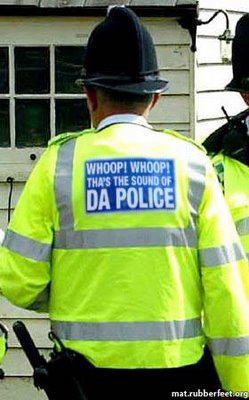
Jobs not over till the paperworks done.
This comes from a police officer and details the paperwork needed in the event of an arrest.
Oh but this is just the beginning of the process. You forget the:Some of these are really a folder of documents. Ane we wonder why we see so few bobbies on the streets..................
Search of offender
Booking in of property/evidence
Completion of Incident Report Book
Fingerprints & DNA
Add to Crime System
Add to Intelligence system
Add to Missing/vulnerable persons database
Police National Computer Check of Offender
Police National Computer Update of Offender details
Case File Including:Prosecutors PNC Printout
- MG1 - Front Page
- MG4 - Copy of charge sheet
- MG4A - Conditional Bail
- MG5 - Case Summary for overworked CPS Prosecutor
- MG6 - Confidential Info
- MG6B - Disclosure of Officers past history i.e. convictions
- MG6C - Disclosure of unused material i.e. unused notes or cctv
- MG6D - sensitive Info
- MG6E - The signed certification that nothing will undermine the CPS's case
- MG7 - Remand in custody application
- MG10 - Witness non-availability calendar
- MG11 - All evidence in statement form
- MG12 - Exhibit list
Copy of Custody Record
Copy of Incident Report
Update Custody Record
Interview
and more....
Friday, 2 December 2005
Old Comrades
THE LOVE of man and woman is as fire,
To warm, to light, but surely to consume
And self-consuming die. There is no room
For constancy and passionate desire.
We stand at last beside a wasted pyre,
Touch its dead embers, groping in the gloom;
And where an altar stood, erect a tomb,
And sing a requiem to a broken lyre.
But comrade-love is as a welding blast
Of candid flame and ardent temperature:
Glowing most fervent, it doth bind more fast;
And melting both, but makes the union sure.
The dross alone is burnt—till at the last
The steel, if cold, is one, and strong and pure.

Royal Mail to avoid selling stamp
I don't know who is the most stupid here. The Post Office accepting the design of the stamp or the fuss made bythe Forum over it's distribution. The Christian religion suffered very many deliberate insults and daft restrictions. Look at almost any Saint and we find that they died in a most unsalubrious manner - torn apart, pierced with arrows, crucified. However, it seems that those of the Christian faith have sufficient confidence to ignore these matters. Those who complained in this instance seem to lack that attribute. They do appear to have an over-weening idea of their own importance - calls for a withdrawal indeed.
I'm not a God-botherer. Just someone who cannot understand what is so important in things like this.
Here's someone who feels even more strongly and has interesting comments
I'm not a God-botherer. Just someone who cannot understand what is so important in things like this.
Here's someone who feels even more strongly and has interesting comments
The Hindu Forum of Britain has welcomed the discussions between the Department of Trade and Industry and the Royal Mail.
This has resulted in a decision on 4th November that Post Office branches would not to issue the 68 pence Christmas stamp to customers unless specifically requested.
The 68p Christmas stamp featured a picture of Hindus worshipping Baby Christ, and had led to calls for a withdrawal by Hindu organisations in the UK.
However, at a meeting on 7th November between Hindu organisations and Royal Mail, it was discovered that Royal Mail had not yet communicated this message of withdrawal to the 40,000 Post Office counters.
As a result, Post Office counters were still selling the stamp until the evening of 7th November.
"We had our people walking into Post Offices on 5th and 7th November to check if the counter clerks had actually received a message from the head office asking them to avoid selling the stamps," claimed Arjan Vekaria, Chair of the Hindu Forum of Britain's security committee.
"But the clerks were continuing to sell the stamps and informed us they had no such message from their head office. This was unacceptable."
"It would have taken Royal Mail thirty minutes on Friday to have designed and sent this message to every counter in the country but even after four days, not a single Post Office counter had received the message to avoid selling the stamps," commented Kishore Ruparelia, General Secretary of the Vishwa Hindu Parishad UK. "We specifically asked them why they had delayed sending the message but they were was no reply from them."
After the outrage expressed by community leaders at the meeting on 7th November, Royal Mail finally issued instructions to all Post Office branches on 8th November asking them to not sell the 68p Christmas stamps unless a customer specifically requested it.
The message to Post Office branches said, "Royal Mail has .. asked that the 68 pence Christmas stamp only be offered when specifically requested by a customer. The standard default issue for 68 pence stamps should be the definitive stamp or any other 68 pence special stamp you have in stock. Please note - no further stocks of this stamp will be issued to branches."
"Royal Mail informed us that they would not do a reprint of the 68p Christmas stamp," explained C B Patel, Chair of the Hindu Forum of Britain's Patrons Council.
"We asked Royal Mail if they had actually intended to reprint any of the other five Christmas stamps. We have not yet heard back from them."
Community leaders in the UK have now requested Hindus in the country not to buy the 68p Christmas stamp over the counter.
"We welcome Royal Mail's assertion that they will consult us for any future use of Hindu icons," said Ramesh Kallidai, secretary general of the Hindu Forum of Britain.
"They have said Royal Mail will review its procedures to ensure that future images are appropriately screened to avoid unintentional offence to any community in the UK."
Thursday, 1 December 2005
Jung enough for a policeman
I have often wondered if police service requires that one be a psychologist to join or whether one learns enough on the job to pass as one
This guy seems to have it all sussed anyway.
This guy seems to have it all sussed anyway.
Christmas thoughts
Those of the clan who come here will know my thoughts about Christmas. I was going to post them here a bit nearer the day. However, this guy has summed it up better than I could.
Romance is dead?
Whatever happened to that old routine of a flower, London show, taxi to booked table in nice restaurant, good food eaten slowly, good wine drunk quickly, taxi home and then suggestion about coffee? This is from a Urban dictionary I get each day
| 1. booty call | |
(noun)a phonecall, page, or conversation aimed at getting into your pants.Not an invite to a movie or dinner, not just coffee, not a casual or formal get-together, just a plain old-fashioned "let's fcuk"
| 2. booty call | |
A call for sex.
I was mad horny, so I gave my boyfriend a booty cal
Wednesday, 30 November 2005
Natural disasters - Asia
| Impact of natural disasters in Asia and the Pacific, 1972–2000 | |||
 | |||
| number killed (thousands) | number affected (thousands) | damage (US$1 000) | |
| |||
| South Asia | 761 | 2 164 034 | 60 881 |
| Southeast Asia | 73 | 284 074 | 33 570 |
| Northwest Pacific and East Asia | 606 | 1 447 643 | 317 174 |
| Central Asia | 3 | 4 895 | 986 |
| Australia and New Zealand | 1 | 15 761 | 21 900 |
| South Pacific | 4 | 4 061 | 3 139 |
| |||
| total | 1 447 | 3 920 467 | 437 649 |
I show it here as an introduction to a sort of apology on my part. That's not a phrase I type very often. Someone on a forum was querying God's purpose in natural disasters. I contributed my opinion that it was His form of birth control and served the purpose of limiting populations in countries which, generally, were inadequate in resources - physical, financial or motivational - to support the numbers there already at anything above the most basic level.
I'm sure there are enough who have read even this far to foresee what attention this attracted. I'm sure that without the protection of cyber space, I would have been excommunicated and crucified upside down many times over.
I make no apology. The concept of Holy Durex was one imparted to me by someone I regard as the nearest thing to a Saint that I have ever met. That includes Mother Teresa who said she would pray for me; I know not why. When I was based in Korea back in 1955'ish I came across an orphanage. It was a few miles off any beaten track. Dilapidated from something not too wonderful to start with. All wide open spaces and long corridors with big communal dormiteries. The Boss lady was a Sister Theresa. She had been at the monastry for 35 years at that time and had risen from junior bum wiper to Sister Superior. In all her time there, she had never been more than ten miles from the orphanage. This would have put here there at the time of the Japanese occupation of Korea. The Japanese had not been very nice but she did not say a word against them. She had no other Europeans with her and only a small team of Korean sisters and lay workers. The link here shows her in about 1953.
The place contained I know not how many kids. From babes in arms up to about 12 or 13 year olds. The adult staff were totally outnumbered and it was obvious that the kids looked after each other. Those of three looked after one year olds, five year olds looked after three year olds. The youngest were kept confined to their beds with sort of swaddling clothes round them and the whole tied to the bed frame. A fair proportion of the children had disabilities. Disabilities - what a nice sort of word. What they were called back then was cripples and that definitely described their lives and prospects. Some quite clearly had mental problems. There was nothing organised to keep the kids in any way involved in life. They had no toys, they knew no games, Half of them didn't even have names that they recognised.
When an outsider came - which I gathered was extremely rare - the children crowded around like sheep when feed is dished out. No animation, no pushing or shoving, no noise, nothing except big big eyes that followed any movement. If you put a hand in your pocket, all eyes followed it and waited to see what happened next. Clothing was scarce. Nearly all were totally barefoot. Most wore only some sort of vest that generally ended at about belly button level. I was told that this was all-year round wear. Korean winters are very very extreme. Vehicle radiators freeze up as the vehicle is driven along. Put a bare hand on metal and bits of skin stay behind. It is a wet cold.
I was dumbfounded. Korea was a place with very low standards of living but I had never even imagined this. It made Inn of the 6th Happiness look like Butlins. On that first chance discovery, I spoke with Theresa. She explained that the orphanage had been overcrowded whilst the war was in progress and the kids were genuine orphans. The children I was seeing were mainly mixed race progeny arising from kids born to Korean single mothers made pregnant by US troops. This was very shameful and the children were abandoned on the orphanage doorstep. Martha came out with the remark that 'these children are left on the doorstep. Many of them die before we find them in the winter and we have to bury them. And they are not even Catholic'. A woman made very hard by what she experienced. It was during one of my later visits that she commented that the future of these kids and the country was such that it would be better for them if they all went to Heaven as soon as possible. She then spoke of natural disasters being one way of keeping population within capability.
We got the place adopted by the Army. Many things 'disappeared' from their rightful place and ended up there. One of the most tangible changes was in the kids when they got to receive visitors. They became much more animated.
Tuesday, 29 November 2005
Ya no mas
Cuba does not seem to figure greatly in our daily thoughts. Che is no longer the idol of revolting students and I suppose all that most of us know is that Castro is able to make speeches lasting seven or eight hours non-stop. I've met quite a few who have holidayed in Cuba and they all seem to have enjoyed themselves and did not mention any political tenseness. I only think of Cuba in terms of cigars.
However, I typed Cuba into the search engine during a moment of boredom and found a whole batch of blogs by his opposition. Seems that his blend of communism is not appreciated and there is a voluable group of critics.
Wonderful thing is boredom. I'd never have known had I been following some directed line of inquiry.
Sno joke
 This is the sort of scene I suppose the weather forecasters were thinking of. It is, of course, by my old mate Pieter Brueghel the Elder so that puts it back in the 16th century. Just as well - I think the guys coming off the hill have been hunting with dogs. Difficult to see at this size but the real paintings are fascinating for the detail that is crammed in. I used to stand well back at the start and walk in closer quite slowly. Things one missed at three paces away jumped into detail at two steps off. Both the Brueghels had this talent - some of the interiors will keep you amused for hours.
Funny thing was when we lived in Antwerp. I used to get invited to a number of the dinner parties the civilian staff held for each and every Saint's Day or whenever they could get together for a feed, serious drinking and dance marathon. At the end of some evenings I used to look around at the dead and dying and it always reminded me of these two guys.
Back to the trough?
I do not suppose that too many of us here in the UK read many foreign papers - there is more than enough of our own media than we need to wrap chips. However, here is a nice little tit-bit from a far away country. Lot of oil there. Just like Iraq. Being praised by the member (what an apt word for this guy! An upright member) for Bow & Bethnal Green. Just like he did in Iraq where, I hasten to add, it has not been admitted by him that he was doing nicely on vouchers.Wonder what the benefits are for his constituents?
Monday, 28 November 2005
No need for AA
Wandering from blog to blog, I came across this:
In the Elderly
Many people feel that it is normal for elderly persons to be depressed. This is a dangerous misconception. If you suspect an older adult is suffering from a depressive illness, a thorough medical examination should be given as soon as possible.
- Unusual complaints of aches and pains (back, stomach, arms, legs, head, chest), fatigue, slowed movements and speech, loss of appetite, inability to sleep, weight increase or decrease, blurred vision, dizziness, heart racing, anxiety.
- Inability to concentrate, remember or think straight (sometimes mistaken for dementia). An overall sadness or apathy, withdrawal; inability to find pleasure in anything.
- Irritability, mood swings or constant complaining; nothing seems to make the person happy.
- Talk of worthlessness, not being needed anymore, excessive and unwarranted guilt.
- Frequent doctor visits without relief in symptoms; all tests come out negative.
- Alcoholism, which can mask an underlying depression.


One in four - everywhere or just in sink estates?
From today's Telegraph. Scary statistics. Come on B Liar - tough on crime and all that. These are just kids and not those nasty terrorists.
Millions of young people 'on wrong side of the law'
By Philip Johnston, Home Affairs Editor
Filed: 25/11/2005)
Almost three million young people aged between 10 and 25 have been involved in crime or anti-social behaviour in the past year, according to Home Office figures published yesterday.Half were classified as serious or frequent offenders and about 22 per cent admitted to using drugs - even trying them when they were as young as eight. The figures emerged from the Offending, Crime and Justice Survey designed to establish the true level of juvenile crime. The conventional British Crime Survey does not include offences committed by children under 16.Researchers sought the views of a sample of 5,000 young people and asked whether they had committed any of 20 specific crimes, including burglary, thefts, robberies, assaults and drug dealing. A quarter had committed at least one of the offences in the past year. From this, they extrapolated that, across the country, about 1.6 million had committed a property crime and 1.7 million a violent offence. Half a million had committed at least one or more serious offence. The survey group was also asked about anti-social behaviour such as graffiti - admitted to by three per cent - or being "noisy or rude in a public place", which was conceded by 16 per cent.The most common offences were assault (16 per cent) and theft (12 per cent). However, of the sample, only small proportions had been arrested or sentenced in the courts.
Richard Garside, the director of the Crime and Society Foundation, said: "It's hardly a shock to find that many children and young people commit some crime. But on the Home Office's own definitions one young person in every eight is a serious offender, and one in every 12 is a prolific offender. Does this not call into question the point of such definitions?" David Davis, the shadow home secretary, said: "This report demonstrates the extent of the problem there now exists with crime among young people. We need root and branch reform." Separate research showed that almost half of prolific young offenders on a flagship community sentence breached their conditions or were thrown off the programme.
Gives Thanks
This here is something you just have to read. Would be nice if our incomers were so keen to adhere to the customs of their 'new' homeland.
That Was The Comedy Show That Was - Goodness Gracious Me.
Amongst the ton or more of Sunday papers, I read a passing comment about the latest series on TV of ‘Little Britain’. Someone who had just emerged from a Rip van Winkle state was unable to see what was funny. This struck a chord with me inasmuch as I felt the new production was below par in comparison with the earlier shows. Exactly what it was that had gone wrong evaded me. The gross exaggeration of the characters still shocked at times but I deemed to be missing the full in your face effect.
One of the things that I had enjoyed was that I felt it was challenging as well as being entertaining. The programme seemed to be saying what I sometimes wanted to say but where I lacked a platform and, maybe, the concern about how my opinion would sound. No one could be offended by Daffyd (The Only Gay In The Village) and his lesbian barmaid. They brought out the question of alternative sex lives in a way that no one could claim was offensive and this could lead to further discussion. The pretend-disabled guy in the wheelchair and his carer had similar properties. We have now seen enough episodes, and catch-phrases have entered everyday usage, that shock has worn off. The critic awakening after his 40 year snooze was just too late. Rather like joining a group just at the moment the punch line of a joke is revealed.
Other long-term TV entertainments such as East Enders, Coronation Street, Casualty and Co seem destined to run for ever. Admittedly, they are drama rather than entertainment but it seems that the viewers do not tire of them as happens with comedy shows.
We have a history of spurning great entertainment. I can only go back to TW3. There again the – let’s call it honesty and shock – of the script was it’s main attraction. It broke all sorts of taboos and taste boundaries. I think it must have been the first to ridicule the Royal Family. Again, time robbed it of its attraction. It was not that suitable new targets did not exist. The unique selling point had been lost.
Other shows that demanded attention to issues other than comedy were those involving Alf Garnett. He opened up discussions on bigotry, racial and sexual prejudice. He was so dreadful that he was able to refer to things that none other dared to raise in public or over their breath. Well, not strictly. I sort of grew up in that part of his East End and there were many real Alf Garnetts. I think that any attempt now to reprise Death us Do Part would run into serious trouble – Mosley on the march sort of reaction.
OK – what went wrong with the Muppet Show? Humongous whilst it was here and died with a whimper. No confrontation other than gentle mickey taking of the guests. No big brave statements. I think it was like our favourite Teddy Bear or comfort blanket – we just grew out of it.
There was the series based upon an Army entertainment unit in India during the last World War – ‘It ain’t half hot Mum’. This was not so ‘in your face’ as the others but again, it exposed misconceptions about Indians and included sexual discrimination in a low-key style. I think that went for something like the Muppets. Those who had served in the Army in general and in India in particular were a dying breed and support just ran out. It still gets repeated quite a bit in the outer space of Sky after 1 a.m.
More recent entertainment has also faded after a big glossy start. Goodness Gracious Me. Again, we get the pattern that it said things banned or difficult for the rest of us. It mocked our perception of the Indian life style but, as it was written and performed by Indians, how could any of us complain? It showed us just how stupid and wrong those attitudes were. There was a similar style show before this – I’ve forgotten the title but it was scripted and performed by black artists. They reflected our prejudices in comic style and exposed them for what they were – ignorant and ill-informed. The show included a Nigerian (played by Desmond someone) who was here ostensibly to study as an accountant but repeatedly failed his examinations despite having lived in England for more than 10 years. He explained that his ‘fadder was very rich mon’. We had a real one of these employed by me as a security guard and I found great difficulty restraining myself when he spoke of his, naturally, rich family in Nigeria. I did once ask him what his father did that made him rich but was unable to fully understand his answer because it was hurting to bite my lips.
So, it seems that comedy is constantly re-inventing itself. Even going back to live entertainment before TV was a common possession. Max Wall - I saw him twice and would not bother a third time. Charlie Chaplin - once was enough funny as he was. Arthur Askey - my third seeing was my last. Tommy Trinder - ah; different. I could have stayed with him.
Just another little thing from the pre-waste recycling papers. There was an interview with the cameraman who had shot a lot of Sophia Loren's movies. He explained that to do his job properly he had to discuss and get close to her and examine her from all angles. Over time, this grew to an intimacy they both recognised. He said, 'But I was married and didn't dare to risk it'
My God! Didn't dare. Risk it. I've been good all my marriage - except, occasionally, mentally - but being in his position would certainly have led me astray.
Sunday, 27 November 2005
Media bias? surely not!
Having taken the Queen's Shilling and then being forced to earn it over more than twenty years, I know just how useless the media is at presenting really faithful accounts of service life and conditions. It's hard to do anyway. Either it is quite routine (aka boring), rush and wait with false alarms or total chaos interspersed with a fair degree of disorienting panic.
Because of this, I've not been too confused by the lack of convergence in tales from Iraq as related in the media and as told by many of the military bloggers. There are some exceptions though but mainly unsponsored. I have found quite a fair report on a military-inspired initiative to correct the inbalance. Makes good reading and it seems a shame that, by it's very nature, it is unlikely to get widespread coverage.
Because of this, I've not been too confused by the lack of convergence in tales from Iraq as related in the media and as told by many of the military bloggers. There are some exceptions though but mainly unsponsored. I have found quite a fair report on a military-inspired initiative to correct the inbalance. Makes good reading and it seems a shame that, by it's very nature, it is unlikely to get widespread coverage.
Subscribe to:
Posts (Atom)